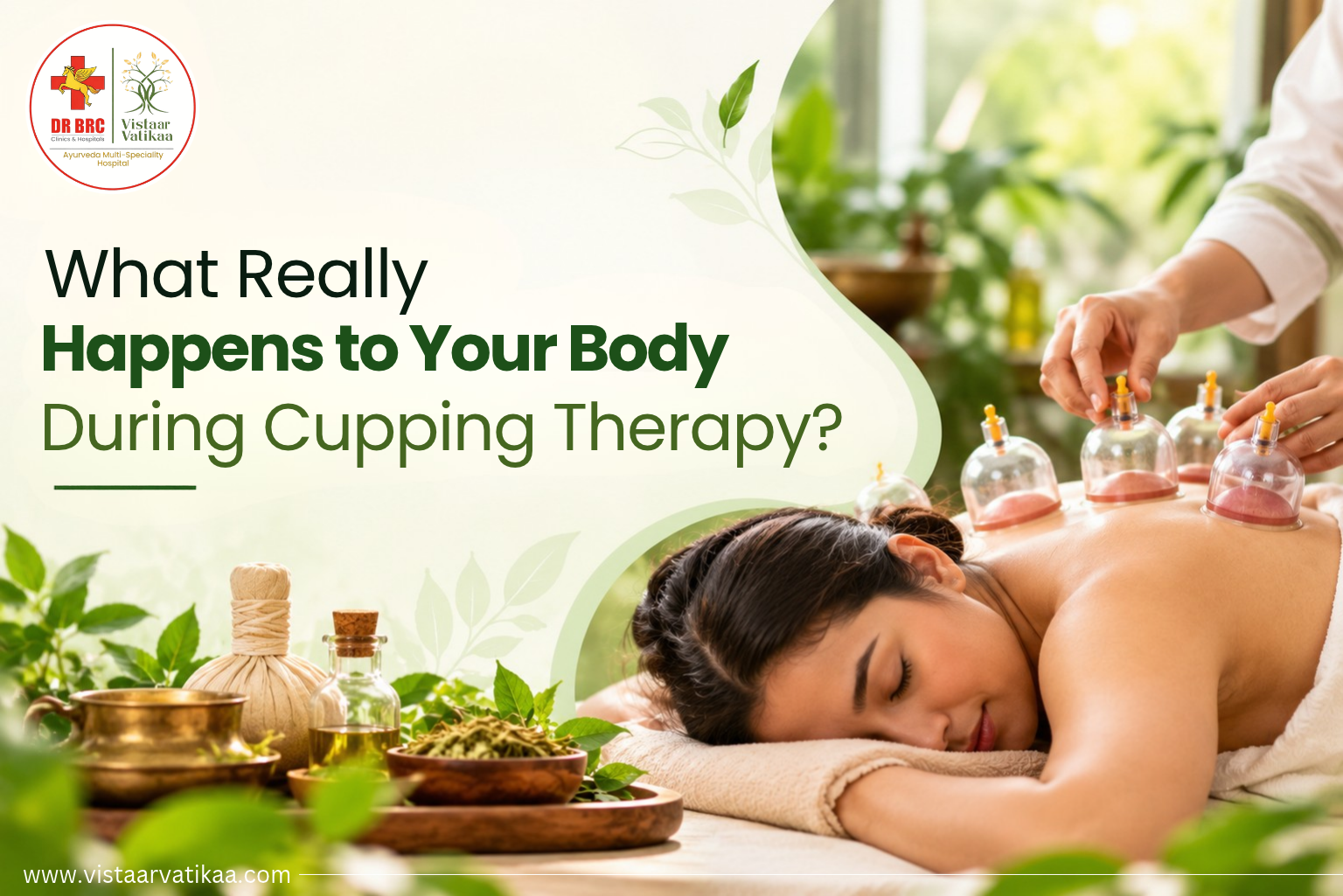
What Really Happens to Your Body During Cupping Therapy?
Cupping therapy is an ancient healing practice that uses small glass cups and gentle suction on the skin. Healers in China, Egypt and the Middle East have used it for centuries.
Instead of pressing on your body, the cups lift your skin and muscle, which works like a massage in reverse. At DR. BRC Vistaar Vatikaa Hospital, we offer cupping therapy in Gurgaon to people whose shoulders have forgotten how to relax.
Many first-timers expect pain, yet what they feel is a firm tug and a slow, spreading warmth.
The First Few Seconds: What Suction Does to Your Skin
A regular massage pushes into your muscles, whereas cupping does the reverse and lifts the tissue towards the cup. Our therapists warm the air inside a glass cup or use a small hand pump to create suction.
Your skin rises first, followed by the layer of fat beneath it and the thin sheet of fascia below that. That lift gives breathing room to layers that spend most of the day squashed against an office chair.
What Happens Beneath Your Skin During a Cupping Session
Once the cups settle into place, three quiet changes start under the surface, and each one affects how you feel when you leave.
- Blood Moves In: The drop in pressure widens tiny vessels, so fresh blood reaches muscles that felt cold or stiff.
- Fascia Gets Some Slack: The wrap around each muscle loosens its grip and begins to glide with less drag.
- Fluid Finds Its Way: Lymph and tissue fluid start moving, which may ease puffiness and that heavy, waterlogged feeling.
Why Cupping Therapy Calms Your Nervous System
Your skin is packed with nerve endings, and a steady pull from each cup gives them something new to report. Doctors call this the pain-gate theory, where fresh signals crowd out pain messages before they reach the brain.
Many clients notice their breathing slow in the middle of a session, and a few doze off on the table.
Current studies show short-term relief for many people with neck and lower back pain. For this reason, we see cupping as one part of a wider plan, not a standalone cure.
Reading the Marks Cupping Leaves Behind
Round purple circles tend to alarm first-time clients, yet they are a normal part of the process.
Where the Colour Comes From
Suction breaks a few tiny capillaries near the surface, and the escaped blood pools under the skin. Unlike a bruise from a fall, the area does not ache when pressed in most cases.
Why Some Marks Look Darker
Darker circles tend to appear over tight muscles or areas where blood flow was sluggish. Traditional healers read these shades as signs of stagnation, though modern science has not proven the link.
How Long They Stay
Your body clears the trapped blood on its own, and the marks fade within three to ten days.
How We Approach Cupping Therapy at Vistaar Vatikaa
The best cupping therapy in Gurgaon comes down to safe practice, honest advice and a therapist who listens before reaching for a cup.
- A Proper Conversation First: Our doctors go through your health history, medicines and comfort level before any cup touches your skin.
- The Right Method for You: We use dry cupping with suction alone, or wet cupping with tiny skin pricks that draw a little blood.
- Honest Safety Checks: We advise against cupping in pregnancy, over broken skin, or for anyone with bleeding disorders or on blood thinners.
- Easy Aftercare: Sip water, keep the area covered and warm, and skip hot showers for a few hours.
Conclusion
From the outside, cupping looks like a few glass cups and some purple circles on your back. Once you understand what happens beneath the surface, the marks stop looking scary and the relief becomes easier to trust.
At DR. BRC Vistaar Vatikaa Hospital, we keep every session unhurried, personal and rooted in Ayurveda and Naturopathy. If you have been thinking about cupping therapy in Gurgaon, our team is happy to talk it through with you.
Common Questions About Cupping Therapy
Does Cupping Therapy Hurt?
Most people describe a firm tug under the cups, not sharp pain. Our therapists adjust the suction as you go, so you stay comfortable from start to finish.
How Long Does a Cupping Session Last?
In most sessions, the cups stay on for five to fifteen minutes. We confirm the full length of your visit after the consultation, based on your needs.
How Many Cupping Sessions Will I Need?
That depends on your condition and how your body responds to the first session. Our doctors space out sessions so your skin has time to recover.
Is Cupping Therapy Safe for Everyone?
Cupping suits most healthy adults, but it is not the right choice for everyone. We check for pregnancy, skin conditions, bleeding disorders and blood-thinning medicines before your first session.